

Right-first-time batches
The operator can only move on once the previous stage is properly closed: materials verified, parameters within range, sign-offs done.
A batch rejected in a GMP audit costs far more than digitalising the production process. IP6 MES prevents errors and streamlines every production stage, leaving the complete, signed batch record — without a single sheet of paper.
Guided production, in any manufacturing plant
Benefits
For the production manager and the quality lead at the same time.
The operator can only move on once the previous stage is properly closed: materials verified, parameters within range, sign-offs done.
Digitalising the process and signing off each stage produces the batch record automatically.
Automatic data capture from plant equipment: traceability and time spent on every activity and resource are recorded, cutting the cost of approvals and manual work.
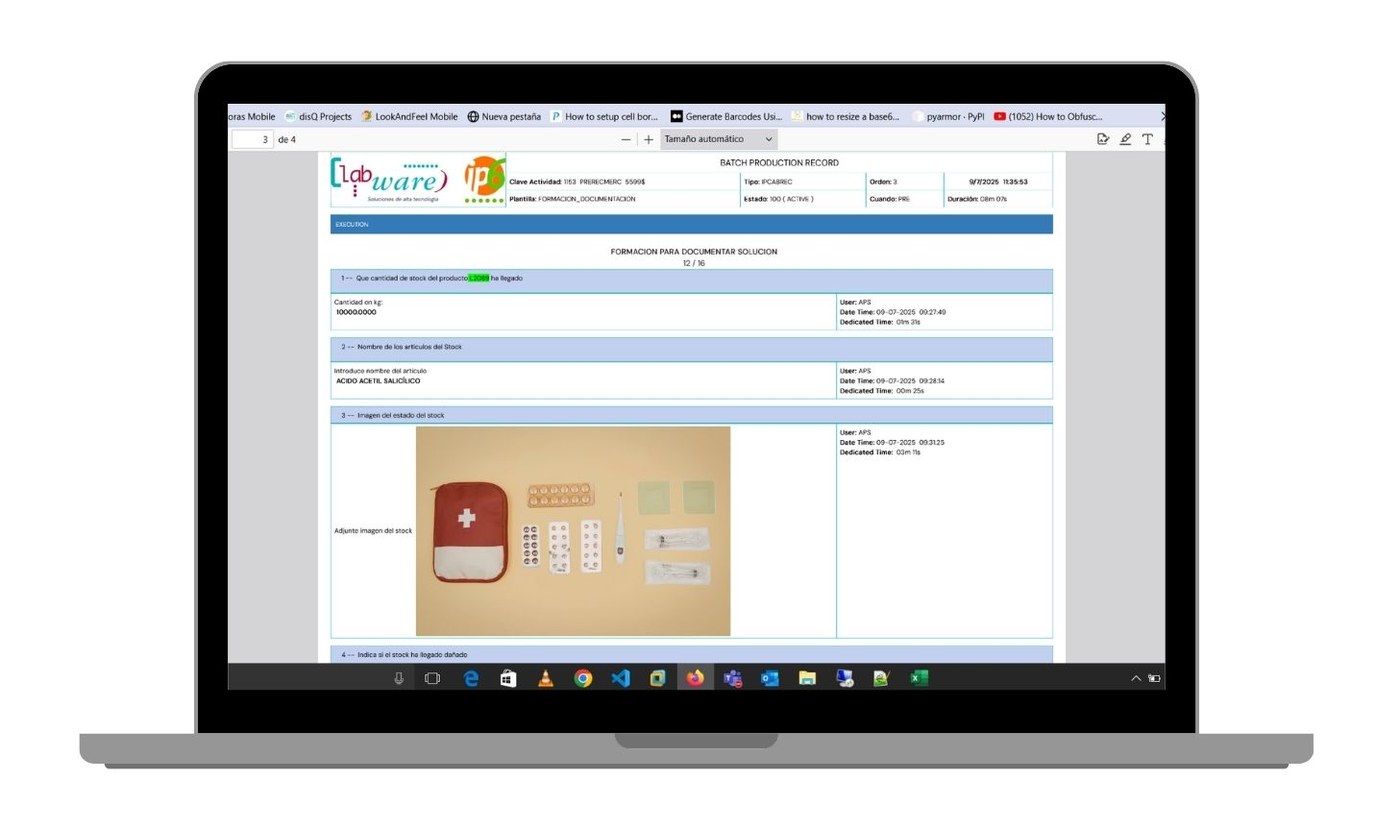
The real screen, not a mock-up
IP6 MES is made up of two modules: an electronic manufacturing guide (E-Guide) that removes paper and guides the operator step by step, and an automatic electronic batch record (E-BR) that logs every stage of the process and the time spent. Weighing, checks and in-process controls are recorded on the spot, with alerts if anything falls out of range.
The result is an electronic Batch Record validated to GMP, ready for review without reconstructing anything from paper.
Differentiation
Paper doesn't warn you when something goes wrong, and the ERP doesn't go down to shop-floor detail.
Versus paper
Versus a generic ERP module
Connected to the whole operation
Labware is a technology partner able to respond to all of our challenges. Flexible and responsive, able to adapt to our business growth, reliable and interfaced with our ERP. With their help we've automated two logistics warehouses and our internal and external factories.
For the technical profile
For process engineering and IT: what's underneath, including the standards side.
Frequently asked questions
Yes. The system can capture data from any type of machine, equipment or system present on the plant floor.
The MES module digitalises manufacturing lines and allows direct integration with industrial machines to obtain real-time information such as speeds, statuses, production times, stoppages or process parameters.
This enables full production monitoring and removes the need for manual records.
Traceability is managed in full at every stage of the production process.
Every action carried out within a manufacturing guide is logged with:
All information is linked to the manufacturing order, giving full traceability of the process.
Yes. By capturing real times, consumption and operational performance, the system can detect inefficiencies and optimise manufacturing costs.
The platform provides visibility into:
This supports decision-making based on real data.
Yes. MES allows you to record, manage and trace:
All of this information is logged and linked to the corresponding order to guarantee traceability and later analysis.
Yes. The platform can be integrated with other systems through standard interfaces and connections.
The ERP, for example.
This keeps manufacturing orders, consumption, production statuses and other relevant data in sync.
Integration between the MES and WMS modules automates the flow of materials and improves control of supplies on the plant floor.
When a manufacturing order needs raw material, the system can automatically manage the sourcing required for production.
In addition, material issues and stock movements are logged automatically through tickets and digital traceability.
Yes. While orders and activities are being carried out, documentation and evidence can be attached directly in the system.
For example:
All documentation is linked to the manufacturing order to make later audits and reviews easier.
Yes. The system lets you monitor the status of manufacturing orders in real time through dashboards and plant-floor monitors.
You can view:
All information updates in real time to support operational oversight.
Yes. The system manages recipe versioning and ensures the latest approved version is always used.
This guarantees document control and prevents errors from using outdated versions.
The traceability of changes and approvals made to each recipe is also recorded.
IP6 platform
WMS with real-time traceability: inventory reliability above 99%, native batches, expiry dates and quarantines.
Learn more →Paperless test recording and validation, with batch release connected to warehouse and production.
Learn more →Guided weighing with connected scales: zero dosing errors and every gram documented.
Learn more →Digital Smart Qualification: protocols, SOPs and CAPA with electronic signature, connected to the operation.
Learn more →Want to dive deeper into the regulation? Read the GMP Traceability guide →
Next step
A 30-minute demo with a real manufacturing order, guided from start to finish.
No commitment